
What Watching Great Performances Taught Me About Human Behaviour

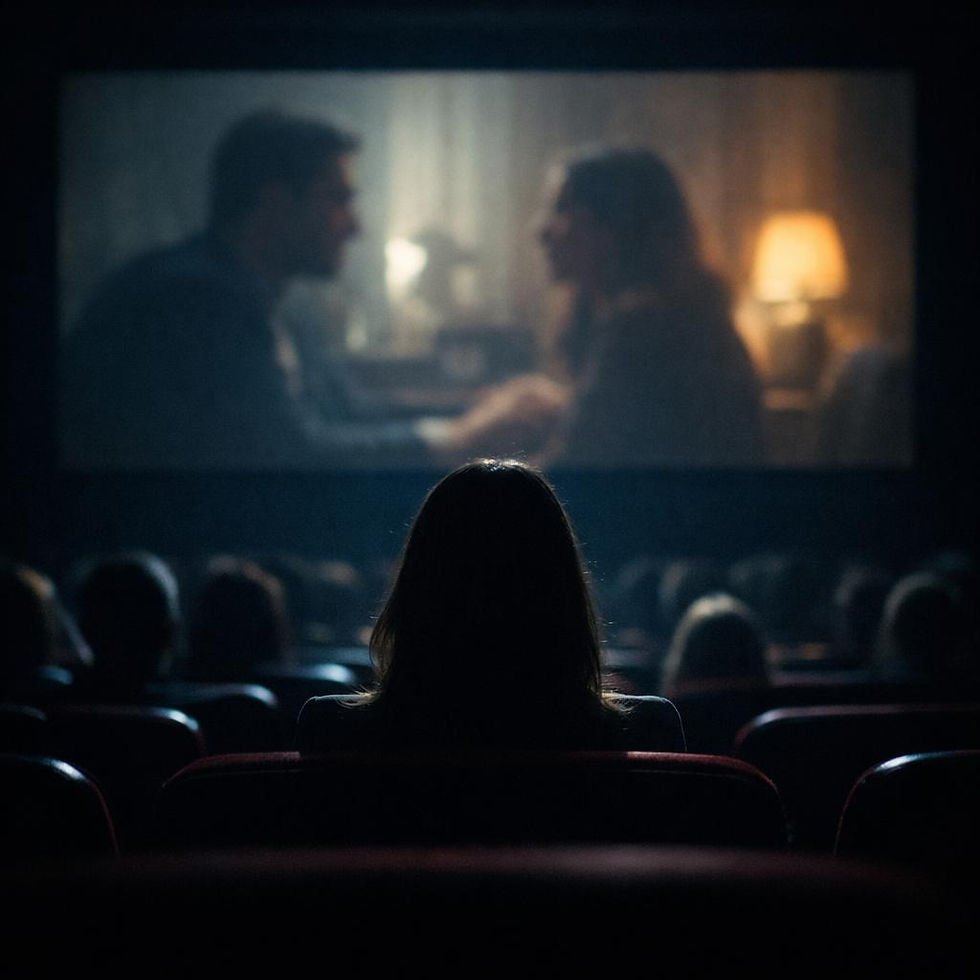
There is something I say often to my actors, and it feels even more true as I sit down to write this today. Your training is not just in the room, it is in the way you watch the world. This week’s blog is for you, as always, yet it comes from a slightly different angle. It comes from my deep love of film, from years of sitting in dark cinemas, studying performances, feeling something shift in me without always being able to explain why.
Film has never just been entertainment for me. It has always been a study of human behaviour, of truth, of what people reveal and what they hide. It is art, yes, but it is also a mirror. The kind that does not show you what you want to see, it shows you what is really there underneath the surface.
When you watch a great performance, you are not just watching someone “act.” You are witnessing decision-making in real time. You are seeing what a person does when they want something, when they are afraid, when they are trying to control how they are perceived, when they are about to lose everything. That is where the gold is. That is where human behaviour becomes undeniable.
What has always fascinated me is that the most powerful performances are rarely about what is being said. They are about what is being withheld. The glance that lingers a second too long. The breath that catches before a response. The subtle shift in energy when someone walks into a room and immediately claims or loses status without saying a word.
This is not just acting. This is life.
The truth is, most people move through the world performing versions of themselves. Polished, edited, socially acceptable. They say the right things, they play the role that is expected, they stay within the lines. What film does, when it is done well, is strip all of that away. It exposes the raw mechanics of desire, fear, love, control, power. It shows you what people do when they can no longer maintain the mask.
That is why film is such a powerful study for actors. You are not just learning how to deliver lines. You are learning how humans behave when the stakes are real. You are learning how to read between the lines, how to feel what is not being said, how to understand the deeper truth of a moment.
It also becomes a study of yourself.
Every time you are drawn to a character, every time you feel uncomfortable watching a scene, every time something resonates deeply, there is information there. There is a part of you recognising something familiar. Your job is not to ignore that. Your job is to get curious about it.
When you begin to watch film in this way, everything changes. You stop passively consuming and you start actively studying. You start to see patterns. You start to understand why some performances stay with you long after the credits roll, while others disappear the moment the screen goes dark.
There is always a reason.
So here is how I want you to start using film as one of your most powerful tools, not just as an actor, but as someone who wants to understand people, energy, and truth on a deeper level.
1. Watch for behaviour, not dialogue
Next time you watch a film, shift your focus away from what is being said and tune into what is actually happening underneath. Notice the pauses, the physicality, the eye contact, the energy between characters. This is where the truth lives. This is what makes a performance feel real.
2. Track what the character wants
Every compelling performance is driven by desire. Ask yourself, what does this character want in this moment, and how far are they willing to go to get it. Watch how that desire shapes their behaviour, their tone, their decisions. This will sharpen your own ability to play intention rather than surface.
3. Observe how status shifts
In every scene, there is a subtle dance of power. Notice who holds it, who loses it, and how quickly it can change. Watch how actors use stillness, voice, and presence to command or surrender status. This is one of the most magnetic elements you can bring into your own work.
4. Feel what is not being said
The most powerful moments in film are often silent. Train yourself to feel into those spaces. What is the character holding back. What are they avoiding. What are they afraid to reveal. This will deepen your emotional intelligence and your ability to bring layers into your performances.
5. Reflect on your own response
Your reaction to a performance is part of the study. What moved you. What triggered you. What stayed with you. This is not random. This is insight into your own emotional landscape, and when you learn to use that, it becomes one of your greatest assets as an actor.
Film is not just something you watch. It is something you experience, something you learn from, something that has the power to expand you if you allow it to.
There is a reason certain performances stay with you for years. There is a reason you feel something shift in your body when you witness truth on screen. It is because, on some level, you are recognising yourself. The raw, unfiltered, unperformed version of you.
That is the work.
The more you understand human behaviour, the more truthful you become in your craft. The more truthful you become, the more undeniable your presence is, not just on screen, but in every room you walk into.
So the next time you sit down to watch a film, do not switch off. Lean in. Study it. Feel it. Let it teach you.
Your greatest training is already happening.
Love
Jenna ✨


Comments